Introduce
API 5L is a standard developed by the American Petroleum Institute, primarily applicable to oil and gas pipeline systems. It focuses on the public transport of long-distance, large-scale fluids (including oil and gas, water slurries, etc.).
ASTM A106 piping is a standard developed by the American Society for Testing and Materials (ASTM) for pressure piping systems operating at high temperatures. It is commonly found in power plants, oil refineries, boilers, and process piping that needs to withstand high-temperature steam or gas.
Simply put, API 5L is the standard for the “main artery of energy transportation,” while ASTM A106 pipe is the standard for the “blood vessels of high-temperature and high-pressure equipment.”

Differences in chemical composition and mechanical properties
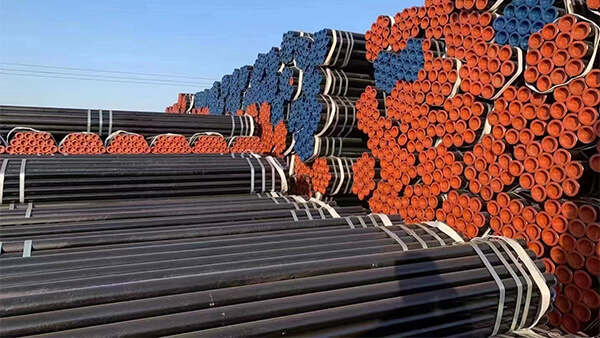
The requirements for chemical composition are the key to distinguishing between the two, as this directly relates to their performance in different environments.
API 5L: This standard places greater emphasis on the weldability, toughness, and fracture resistance of pipelines. Because pipelines need to withstand external stresses such as ground movement and temperature changes during long-distance transport, the API 5L standard imposes strict limits on carbon equivalent and specifies Charpy impact test requirements to ensure toughness in low-temperature environments.
ASTM A106 pipe: Emphasis is placed on strength and stability at high temperatures. To maintain sufficient strength at high temperatures, ASTM A106 pipe typically has a higher carbon content than its equivalent API 5L pipe. Its mechanical properties (such as tensile strength and yield strength) are also assessed based on high-temperature service conditions.
Comparison of manufacturing processes and product forms
API 5L piping can be either seamless or welded. Different pipe materials with different manufacturing processes can be selected depending on the pressure and medium being transported. For example, high-pressure trunk lines may use seamless pipes or high-frequency welded straight-seam pipes, while low-pressure transmission lines may use spiral-welded pipes.
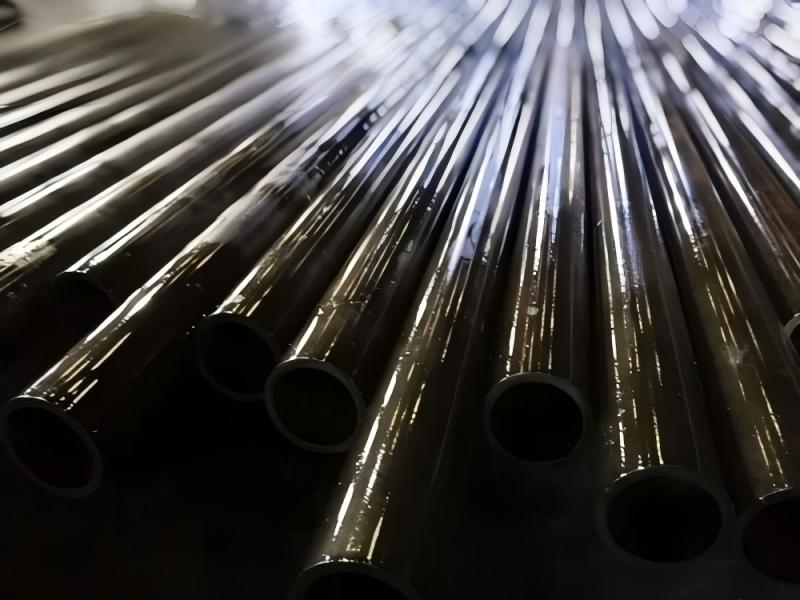
The ASTM A106 piping standard explicitly specifies that its products must be seamless steel pipes. This is because in critical applications requiring high temperature and pressure, seamless structures avoid the risk that welds may become weak points, providing greater safety and reliability.
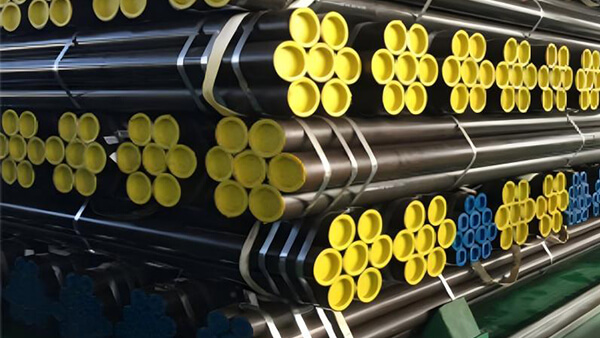
Specialized analysis of high-temperature application scenarios
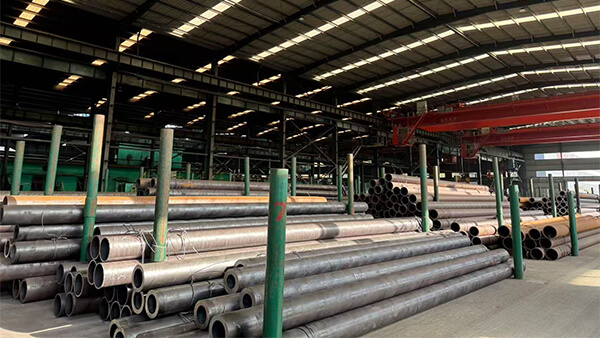
In the high-temperature service sector, ASTM A106 piping is the undisputed first choice. Its standard clearly specifies that the material’s yield strength and minimum tensile strength remain at very high levels at temperatures up to approximately 450°C. This makes it ideal for steam piping, heat exchanger tubes, and other high-temperature pressure vessels.
In contrast, while API 5L can withstand some ambient temperature variations, it was not designed for continuous, extremely high operating temperatures. Its material properties may degrade under long-term high-temperature conditions, making it unsuitable for the high-temperature pressure service level specified in ASTM A106.
How to Choose the Right Model: Summary and Guide
To help you make the right decision, we have summarized the following:
| characteristic | API 5L pipe | ASTM A106 Pipe |
| Main uses | Long-distance transportation of oil and natural gas | High-temperature pressure pipelines in power plants, boilers, and factories |
| Service Environment | Emphasis on environmental toughness and weldability | Focusing on strength and creep properties at high temperatures |
| chemical composition | Strictly control carbon equivalent to ensure weldability and toughness. | The carbon content is relatively high to ensure high-temperature strength. |
| Manufacturing process | Both seamless pipes and welded pipes are available. | Seamless tubes only |
| Key considerations | Resistance to fracture propagation, weldability, and quality of circumferential welds | High temperature tensile strength, oxidation resistance |
In conclusion
When selecting piping, you first need to clarify its core purpose. If your project involves gathering and transporting oil and natural gas over long distances, API 5L is the right choice for compliance with industry standards and safety. If your system needs to transport steam, oil, or other media in high-temperature environments and withstand internal pressure, then ASTM A106 piping is the material specifically designed for such demanding conditions.
Hopefully, this detailed analysis of “What are the differences between API 5L and A106 pipes?” will provide you with a solid and reliable basis for project selection.